Are garage door roller problems making your door noisy, jerky, or hard to operate? Furthermore, worn garage door rollers cause grinding sounds, uneven movement, and eventually complete door failure if left unaddressed. Moreover, understanding roller wear symptoms helps you catch garage door roller issues before they damage your tracks and other components. Consequently, whether you need nylon roller replacement or steel roller upgrade options, finding professional garage door roller repair near you keeps your door running smoothly and safely. In addition, knowing the garage door roller replacement cost helps you budget for this essential maintenance.
What Garage Door Rollers Do and Why They Matter
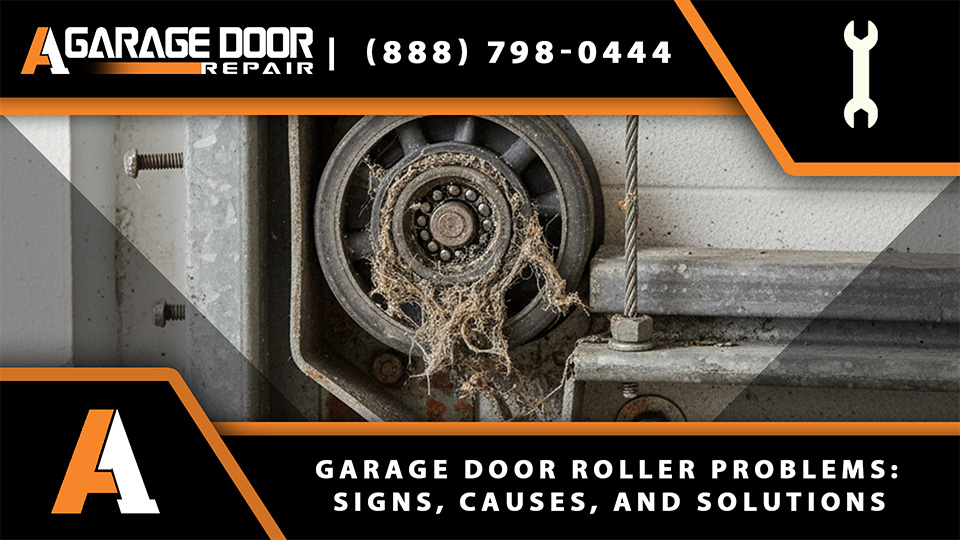
Specifically, garage door rollers are the small wheels attached to the sides of each door panel that guide the door along its tracks. Furthermore, a standard residential garage door uses 10 to 12 rollers that bear the full weight of the door during every open and close cycle. Moreover, each roller completes thousands of cycles per year, making them one of the hardest-working components in your garage door system. Consequently, when garage door roller problems develop, the entire door operation suffers. In addition, failing rollers place extra stress on your opener, springs, and tracks, accelerating wear across the entire system.
Common Garage Door Roller Problems
Additionally, recognizing garage door roller issues early prevents costly damage to other door components. Therefore, watch for these common problems.
Worn or Flat-Spotted Rollers
Moreover, rollers wear down over time from constant use:
- Specifically, flat spots develop on the roller surface causing bumpy operation
- Furthermore, worn bearings create grinding or squealing sounds during movement
- Additionally, reduced roller diameter causes the door to sit unevenly in the tracks
- Consequently, worn rollers force the opener motor to work harder with each cycle
Therefore, worn garage door rollers are the leading cause of noisy, rough door operation.
Broken or Cracked Rollers
Similarly, rollers can crack or break entirely:
- Specifically, nylon rollers crack from age, cold temperatures, or impact
- Furthermore, steel rollers bend or deform under excessive weight or misalignment
- Moreover, broken roller stems detach from the door panel entirely
- Additionally, a single broken roller causes the door to jam or derail from the track
Consequently, broken rollers require immediate garage door roller repair to prevent the door from falling or becoming stuck.
Rollers Off Track
Likewise, rollers can slip out of the track system:
- Specifically, bent tracks force rollers out of alignment
- Furthermore, loose track brackets allow gaps where rollers escape
- Moreover, impact damage from vehicles or objects knocks rollers free
- Additionally, worn rollers that are too small for the track slip out during operation
Hence, rollers off track create a dangerous situation where the door can collapse unexpectedly.
Roller Wear Symptoms You Should Not Ignore
Furthermore, several warning signs indicate your garage door rollers need attention before complete failure occurs.
Sound-Based Roller Wear Symptoms
Moreover, listen for these audio clues:
- Specifically, grinding or scraping sounds during door movement
- Furthermore, squealing or high-pitched whining as the door opens
- Moreover, popping or clicking sounds at specific points in the travel
- Additionally, vibration or rattling that transmits through the walls
In addition, these sounds indicate roller wear symptoms that worsen progressively without repair.
Visual and Operational Symptoms
Similarly, watch and feel for these problems:
- Specifically, door moves unevenly with jerky starts and stops
- Furthermore, visible chips, cracks, or flat spots on roller surfaces
- Moreover, door hesitates or sticks at certain points during travel
- Additionally, excessive wobble or side-to-side movement while opening
Consequently, visible roller wear symptoms mean replacement is overdue and garage door roller issues will only get worse.
Types of Garage Door Rollers
Furthermore, understanding roller types helps you choose the best option for nylon roller replacement or steel roller upgrade decisions.
Steel Rollers
Moreover, basic steel rollers are the most affordable option:
- Specifically, durable metal construction handles heavy doors
- Furthermore, available with or without sealed bearings
- Moreover, steel rollers without bearings are the noisiest option
- Additionally, steel with sealed bearings reduces noise significantly
Therefore, a steel roller upgrade with sealed bearings improves performance at a moderate cost.
Nylon Rollers
Similarly, nylon rollers are the premium residential choice:
- Specifically, dramatically quieter operation compared to steel
- Furthermore, sealed bearings eliminate the need for regular lubrication
- Moreover, do not rust or corrode in humid environments
- Additionally, smoother operation reduces wear on tracks and opener
Consequently, nylon roller replacement is the most popular upgrade for homeowners seeking quiet, low-maintenance operation.
Garage Door Roller Replacement Cost
Moreover, understanding garage door roller replacement cost helps homeowners plan and budget effectively.
Cost Factors
Specifically, several variables affect your total garage door roller replacement cost:
- Furthermore, number of rollers needing replacement, typically 10 to 12 per door
- Moreover, roller material choice between steel and nylon
- Additionally, labor costs for professional installation
- Consequently, whether tracks or other components need repair simultaneously
Average Pricing
In addition, typical costs break down as follows:
- Specifically, steel rollers without bearings cost $5 to $10 per roller
- Furthermore, steel rollers with sealed bearings run $10 to $20 per roller
- Moreover, premium nylon rollers range from $15 to $30 per roller
- Additionally, professional installation adds $100 to $200 for the complete set
Therefore, a full nylon roller replacement for a standard two-car garage door typically costs $250 to $500 including labor.
When to Call a Professional for Garage Door Roller Repair
Furthermore, while some homeowners attempt roller replacement themselves, professional garage door roller repair is strongly recommended.
Why Professional Repair Is Safer
Moreover, garage door roller repair involves serious safety risks:
- Specifically, the bottom roller brackets connect to high-tension cables under extreme force
- Furthermore, improper roller removal can cause the door to fall unexpectedly
- Moreover, misaligned rollers after installation create new tracking problems
- Additionally, professionals identify related issues with tracks, springs, and cables during service
Consequently, the Door and Access Systems Manufacturers Association recommends professional service for all garage door roller replacement and repair work.
Finding Garage Door Roller Repair Near You
Similarly, when searching for garage door roller repair near you, look for:
- Specifically, licensed and insured garage door service company
- Furthermore, experience with your specific door brand and model
- Moreover, written estimates before work begins
- Additionally, warranties on parts and labor
In addition, reputable professionals carry multiple roller types on their truck for same-day garage door roller service.
Preventing Future Garage Door Roller Problems
Moreover, regular maintenance extends roller life and prevents premature failure.
Maintenance Tips
Furthermore, follow these prevention strategies:
- Specifically, lubricate steel rollers with white lithium grease every six months
- Furthermore, visually inspect all rollers during seasonal maintenance checks
- Moreover, listen for new sounds that indicate developing roller wear symptoms
- Additionally, keep tracks clean and free of debris that damages roller surfaces
- Consequently, replace all rollers at the same time rather than one at a time
Therefore, proactive maintenance catches garage door roller issues early and prevents expensive secondary damage to tracks and openers.
Final Thoughts on Garage Door Roller Problems
In fact, garage door roller problems are among the most common and fixable issues homeowners face with their garage doors. Moreover, recognizing roller wear symptoms early and understanding the difference between nylon roller replacement and steel roller upgrade options helps you make informed repair decisions. Furthermore, knowing your garage door roller replacement cost upfront prevents surprises when service is needed.
Consequently, don’t ignore grinding noises, jerky movement, or visible roller damage. Therefore, contact a qualified professional for garage door roller repair near you today and restore smooth, quiet, reliable door operation. In addition, regular maintenance and timely replacement keep your garage door running safely for years to come.
Phone: (888) 798-0444
Email: info@a-1garagedoorrepair.com
Website: https://a-1garagedoorrepair.com/